
Building an Incorruptible Company
You don't have to trade growth for taking care of your team · Read the notes →
Key Takeaways
- Harder is easier. Staying aligned to a clear mission takes more discipline up front, but it builds momentum that squeezing margins or people never will.
- Profit and purpose aren't a trade-off. Companies like Costco and Devoted Health prove you can maximize shareholder value and human flourishing at the same time, you just have to build the structure for both.
- Maximizing shareholder value is a choice, not a law. It's the default most of us were taught in business school, but founders can choose a different foundation and build the structures to protect it.
- The structure has to outlast the founder. Mission statements don't survive on their own. Boards, hold entities, and certifications are what keep the values intact after the people who built them move on.
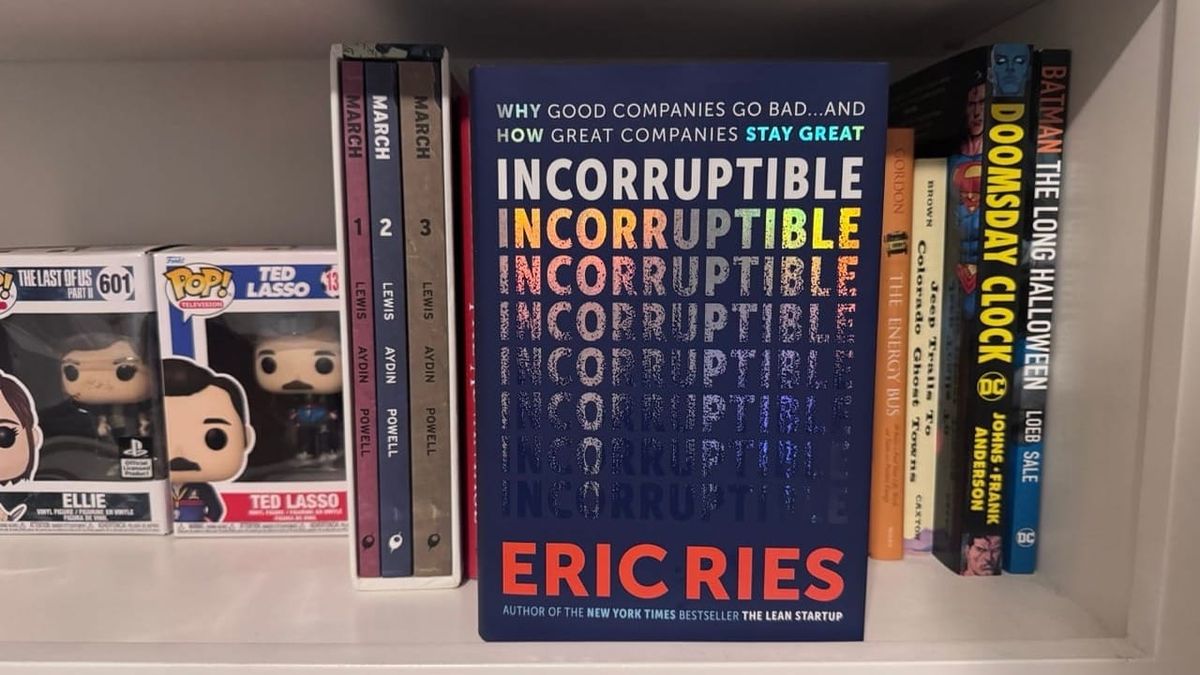
This week I finished reading Incorruptible by Eric Ries that came out this year. It’s a direct follow up to The Lean Startup (2011). Its central theme is that it is possible to create long term, sustainable, mission focused organizations and see significant returns for your efforts. It doesn’t have to be a trade off between growth and taking care of your team, customers, or the greater good. The founder has the power to decide what matters and build the structure for it to thrive beyond themself. The book provides the frameworks and examples of structures to make the organization resilient to outside forces
If you raise the f—ing hot dog price, I will kill you. Figure it out. - Costco CEO and founder Jim Sinegal
There are many use cases throughout the book of organizations that built the structures to survive beyond the founder. Costco is used as an example throughout. It’s a company that has flourished by taking care of its team, setting rules for their margins on products, and keeping the hot dog at a set price of $1.50. The hot dog is something I’d read about before. It’s moved beyond a simple business school use case into a legend. The lengths Costco has gone to keep it at that price really shows they stick to their mission. They essentially built a vertically integrated system to be able to keep it at that price. They figured it out with a team focused on the directive without compromising quality or their values.
The book also highlights Devoted Health by Todd Park. A new health insurance provider focused on providing Medicare Advantage plans. Their whole concept is going the extra mile for their customers.
“When making any decision, visualize the faces of your own family members and loved ones, then ask yourself: if this decision impacted them, what would you do? Then go do that thing, big or small” - Devoted Health directive from Todd Park
They accomplish this by actually having built three companies. An insurance company, a technology platform, and a medical practice. At the core of this model, Devoted Health only makes money if their members stay healthy. They are proving that the bottom line for an insurance company can actually serve its customers and be profitable. The team from top to bottom is empowered to take care of their people as if they were family. The profits follow with improvements to patient outcomes and long term sustainable care.
“When a company says it’s committed to something, look for the massive apparatus they’ve built to back up that statement. If there isn’t one, they’re lying, no matter what the individuals involved may feel.”
A couple of concepts really stood out to me throughout the book.
Harder is easier
Essentially, the idea is that by being focused on a clear unwavering mission, you are taking what feels like the harder path. Eric Ries brings many examples of how alignment to the mission creates drive, empowerment across the team, and passion from customers about the product or service. It creates an energy that goes beyond a single person. Squeezing margins and burning out your people puts negative pressure on the business.
“People desperately want to work for, invest in, and buy from organizations that stand for something aligned with their most fervent dreams”
Human Flourishing
It means “people growing into their potential, physically, emotionally, spiritually”. It would be easy to dismiss this as an optimistic take. However, the point underscored throughout the book is that this doesn’t need to be a trade off. By creating a mission that maximizes human flourishing around a product or service that fills a need, you can have both an extremely profitable company and a human flourishing company.
“During normal times, unchecked power damages the psyche of those who wield it, literally requiring the brain to diminish empathy while amplifying overconfidence. Studies have documented this as “hubris syndrome,” an acquired personality disorder that develops after holding power.”
The false premise of maximizing shareholder value
A concept that really opened my eyes was the idea that the corporation doesn’t need to solely exist to maximize shareholder value. This is a concept I remember all the way back to my University Business courses. It’s been the standard in templates for charters. It’s what’s become the norm and we all just accept it. The reality is, you can make it whatever you want. Doing it at the start of a company bakes it into the foundation but it’s possible at any point to restructure around the core reason the business exists. Eric Ries provides frameworks and example structures in the last part of the book to prove it can work at scale and how to structure to preserve the values of the founders through boards, hold entities, certifications. The more you wrap in these structures, the harder it is for future leaders and owners to unravel it.
It’s also clear you still need to be a profitable and functioning business with a clear service and product. Those pillars don’t go away because you have a clear mission. You just don’t need to compromise your values for profitability. You get to choose to have both AND there is clear evidence you can be more successful with this approach.
It’s impossible to summarize the book but these are a few things that really stood out to me that I highlighted as I was reading. It’s an easy read and I guarantee anyone interested in the concepts of building a human flourishing organization will get value from it. Go ahead and pick it up.
What it solidified for me is the ideas I’ve always held close. If you take care of the people on your team, they will take care of your customers, your services, and each other. It’s not at the expense of profit. It’s a path to maximizing profit and building an organization that lives beyond the founder.
That's the same work I get to do with teams every day, help them find the mission that's already there and build the structure around it.
If you’re a growing team looking to build these foundational concepts in your business, this is the work I do for teams through projects, embedded retainers and 1 on 1 coaching.